|
Scientists Discover the Tuberal Nucleus' Role in Controlling Appetite and Body Weight
Major finding on the tuberal nucleus broadens our understanding of the brain's role in regulating metabolism and food intake, and offers a new avenue of research that can help combat obesity
SINGAPORE, Jul 13, 2018 - (ACN Newswire) - Researchers at A*STAR's Singapore Bioimaging Consortium (SBIC) have identified a new region of the mouse brain called the Tuberal Nucleus (TN), which affects appetite and body weight. It is notable that the TN is of a similar structure to the Nucleus Tuberalis Lateralis (NTL) in the human brain, of which the function is unknown.
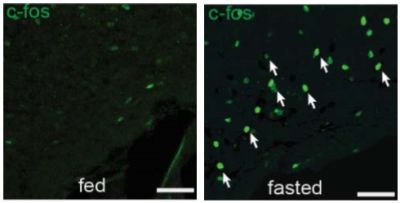 | | Figure 1: There are more activated SST neurons in the tuberal nucleus of mice which have fasted, compared to mice which were fed. | | |
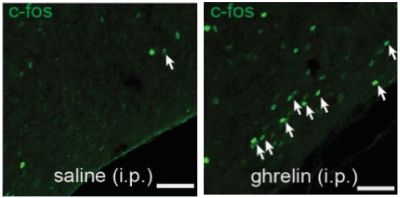 | | Figure 2: There are more activated SST neurons in the tuberal nucleus of mice which were injected with ghrelin, compared to a control group of mice which were injected with saline. | | |
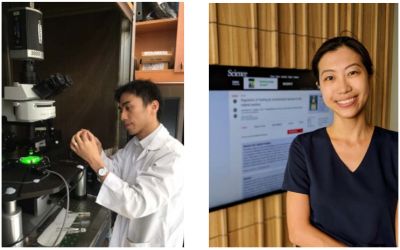 | | Dr Fu Yu (L); Dr Sarah Luo (R) | | |
The A*STAR researchers' discovery of the role of TN in affecting appetite and body weight is a major finding for the understanding of appetite changes in humans, and potential treatment and prevention of eating disorders such as obesity. SBIC's research findings were published in the peer-reviewed journal Science on 6 July 2018.
Past research has shown a strong correlation between neurodegenerative diseases and eating disorders. While neurodegenerative disease patients often show changes in appetite and metabolism, the neural mechanisms involved are not known. Specific pathological changes in NTL have been found in patients suffering from neurodegenerative diseases, but the functional consequence is unknown. The notion of NTL's role in regulating food intake has never been tested either.
Until SBIC's in-depth study and subsequent discovery, the roles of the mouse TN or human NTL, located in the hypothalamus of the brain, remained a mystery.
Dr Fu Yu and his research team from SBIC found that somatostatin (SST) neurons in the tuberal nucleus (TN) played a crucial role in regulating feeding in mice. In the team's experiments, mice either fasted overnight, or were injected with ghrelin - a gut hormone which triggers hunger sensations. Results showed that these procedures led to a spike in SST neuron activity, indicating that these neurons were activated by hunger and likely involved in feeding regulation.
-- Figure 1: There are more activated SST neurons in the tuberal nucleus of mice which have fasted, compared to mice which were fed. https://bit.ly/2LcAmod
-- Figure 2: There are more activated SST neurons in the tuberal nucleus of mice which were injected with ghrelin, compared to a control group of mice which were injected with saline. https://bit.ly/2L2ivTZ
Overnight fasting or an injection of the hunger hormone ghrelin showed an increased activity in SST neurons in the tuberal nucleus, as represented by the increase in white arrows in Figure 1 and 2.
To validate its findings, the team used the methods of chemogenetics and optogenetics that acted as biological switches to precisely manipulate SST neuron activity in the TN of another group of mice.
These experiments demonstrated that activating SST neurons promoted food intake, suppressing SST neurons reduced food intake, and removal of SST neurons reduced body weight gain. The optogenetic experiment also showed that SST neurons could control various brain regions known to influence feeding regulation, such as the paraventricular nucleus (PVN), and bed nucleus of stria terminalis (BNST).
Prof Patrick J. Cozzone, Executive Director of SBIC said, "We are excited by these findings which will have far-reaching implications for human health. The success of this research study underscores the importance of multi-disciplinary and collaborative research to achieve major discoveries in modern biomedical sciences."
Dr Fu Yu, group leader of SBIC's research team, said "Our study showed that the homologous structure of human NTL does exist in mice, and revealed the first function of tuberal nucleus, hence providing fresh evidence on how the brain controls appetite and body weight. The discovery of the tuberal nucleus' function is a game-changer in the study of neural regulation of metabolism and food intake, and opens up a possible pathway towards managing eating disorders such as obesity, a global epidemic and a major cause of health problems such as diabetes."
Diabetes is one of the most common metabolic diseases in Singapore, and imposes a heavy economic and health burden on society. SBIC's research findings on how the brain regulates metabolism and food intake will complement A*STAR's research and development efforts in addressing the related conditions of obesity and diabetes.
Moving forward, the team plans to study the genetic profile of SST neurons in TN and their impact on metabolic disregulations in neurodegenerative diseases. This could lead to new therapeutic targets for metabolic diseases.
For more information on the research, please refer to the paper "Regulating of feeding by somatostatin neurons in the tuberal nucleus", published online by peer-reviewed journal Science on 6 July 2018 : http://science.sciencemag.org/content/361/6397/76.
About SBIC's Research Team
The success of this research study is a result of the combined efforts of SBIC's scientific talents in neurosciences, physiology, molecular biology and advanced neuroimaging. The research study is led by Dr Fu Yu, a recipient of the A*STAR Investigatorship, which aims to nurture promising young researchers, and provide them with the opportunity to conduct independent research at A*STAR, and groom next-generation scientific leaders. Dr Fu's team comprises 12 researchers, which includes Dr Sarah Luo, who is the first author of the article in the journal Science, and a scholar at A*STAR.
For media queries, please contact:
Ms Lynn Hong
Assistant Head, Corporate Communications
Agency for Science, Technology and Research (A*STAR)
Tel: +65 6419 6597
Email: hongxl@hq.a-star.edu.sg
About A*STAR's Singapore Bioimaging Consortium (SBIC)
The Singapore Bioimaging Consortium (SBIC), under the Agency for Science, Technology and Research (A*STAR), is a world-leading preclinical bioimaging platform. With a multidisciplinary team of biologists, physiologists, chemists, physicists, electrical/electronic engineers, computer scientists, and clinicians, SBIC investigates human diseases which are major public health issues using molecular physiology and advanced bioimaging tools, in a translational and pivotal mode with the medical community and industrial partners. SBIC also works on strategic bioimaging projects, including the development of novel imaging probes.
As a national consortium, SBIC aims to harness existing imaging expertise and capabilities in Singapore, bringing together substantial strengths in the physical sciences and engineering with those in the biomedical and clinical sciences. Through an array of focused collaborations and joint appointments, SBIC fosters and supports the growth of multidisciplinary research activities in the field of bioimaging across local research institutes, universities and hospitals, in order to accelerate the development of biomedical research discoveries.
SBIC has a unique capacity to promote rapid transfers of results in animal and human imaging research into the clinical environment, to the immediate benefit of patients. It also ensures the development of financially sound and sustainable contractual research with industrial partners (pharma, food & nutrition, and personal care). SBIC currently operates five joint laboratories with industrial partners under the form of public-private partnerships. For more information about SBIC, please visit www.sbic.a-star.edu.sg.
About the Agency for Science, Technology and Research (A*STAR)
The Agency for Science, Technology and Research (A*STAR) is Singapore's lead public sector agency that spearheads economic oriented research to advance scientific discovery and develop innovative technology. Through open innovation, we collaborate with our partners in both the public and private sectors to benefit society.
As a Science and Technology Organisation, A*STAR bridges the gap between academia and industry. Our research creates economic growth and jobs for Singapore, and enhances lives by contributing to societal benefits such as improving outcomes in healthcare, urban living, and sustainability.
We play a key role in nurturing and developing a diversity of talent and leaders in our Agency and research entities, the wider research community and industry. A*STAR's R&D activities span biomedical sciences and physical sciences and engineering, with research entities primarily located in Biopolis and Fusionopolis. For ongoing news, visit www.a-star.edu.sg.
Source: A*STAR's Singapore Bioimaging Consortium
Sectors: BioTech, Healthcare & Pharm
Copyright ©2026 ACN Newswire. All rights reserved. A division of Asia Corporate News Network. |