|
Fujitsu Japan Embarks on Joint Research for COVID-19 Therapies Using World's Fastest Supercomputer with Researchers of RCAST, The University of Tokyo
Exploration into molecular mechanisms of infection inhibition may lead to development of new COVID-19 Treatments
TOKYO, Jun 22, 2021 - (JCN Newswire) - Fujitsu Japan Limited today announced that it will initiate a new research project with a research team led by Takefumi Yamashita, Project Associate Professor of Research Center for Advanced Science and Technology (RCAST) , the University of Tokyo utilizing the world's fastest supercomputer, Fugaku, which was jointly developed by RIKEN and Fujitsu. The research will leverage Fugaku to identify small molecule inhibitory compounds that can be used as potential drugs in treatments for COVID-19 as well as clarifying the molecular mechanism by which COVID-19 infections are inhibited, leading to the eventual development of small molecule therapeutic drugs. Full scale research begins on June 22nd, 2021 and will continue until March of 2022.
 | | Fig.1 Docking simulation of viral protein and inhibitory compound | | |
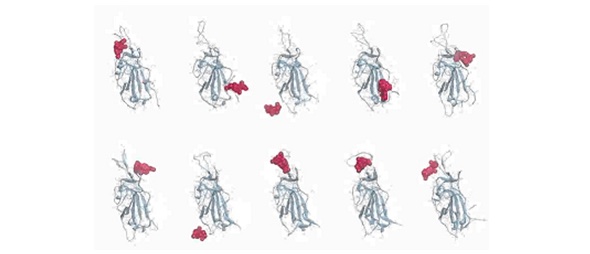 | | Fig. 2 Molecular Dynamics Simulations of Viral Proteins and Inhibitory Compounds | | |
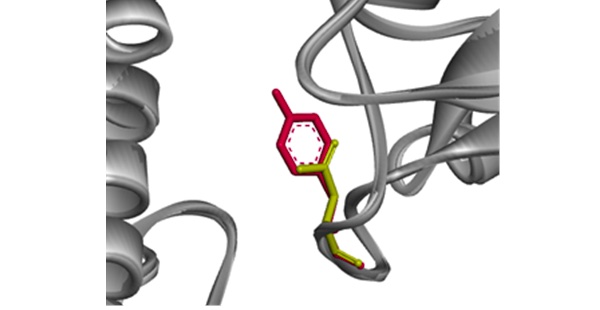 | | Fig. 3 Property prediction of mutant strains | | |
In their joint research, Fujitsu and RCAST will leverage IT drug discovery technology with a focus on inhibitory compound creation technology and molecular simulation technology that precisely represents the state of molecules, performing calculations on Fugaku to identify inhibitory compounds based on the dynamic behavior of viral proteins and to predict the properties of future mutations. By utilizing Fugaku, molecular simulations for viral proteins and inhibitory compounds formulation can be accelerated, clarifying the complexity of binding states and interactions between viral proteins and inhibitory compounds, with the aim of identifying inhibitory compounds that can lead to therapeutic drugs at an early stage.
Going forward, Fujitsu will continue harnessing the power of supercomputers and molecular simulation technologies as it strives to quickly deliver on the promise of potential therapies for COVID-19 with its joint research alongside RCAST Project Associate Professor Yamashita, contributing to the realization of a society in which all people can live with peace of mind.
Background
Since 2011, Fujitsu has been engaged in joint research with RCAST on IT drug discovery technologies to create candidate small molecule compounds for anticancer drugs and other therapies. While a number of highly effective vaccines have been successfully developed in response to the spread of the COVID-19 pandemic, the development of effective therapeutic drugs remains an important priority. Based on the fruits of their joint research to date in the field of IT drug discovery technology, Fujitsu and RCAST have decided to embark on a new intensive research project to identify inhibitory compounds that will lead to the development of new coronavirus drugs, leveraging the unparalleled computing power of Fugaku to contribute to this goal.
Overview of the Joint Research
Since 2011, Fujitsu and RCAST have been conducting joint research on small molecule drugs that are highly likely to be taken orally, are chemically synthesizable, and have low production costs compared to drugs in forms of peptide drugs, antibody drugs, nucleic acid drugs, and cell drugs. With the goal of identifying inhibitory compounds that lead to develop new coronavirus drugs that are effective in small doses and reduce the risk of side effects, molecular simulation technology that is the result of the joint research will be utilized. As it is vital to create a molecular structure that can bind strongly to the viral protein and control its activity, molecular simulation technology and Fugaku will be widely used for tasks including the creation of three-dimensional structural models, clarifying the molecular mechanisms of infection inhibition, and predicting the properties of mutant strains.
1. Clarification of the molecular mechanism of infection inhibition leading to the development of therapeutic drugs.
Produce a three-dimensional structure model of viral protein and candidate compound for an infection-inhibiting molecular structure.
After searching for candidate regions where molecules can bind to viral proteins derived from a coronavirus, for each candidate region, docking simulation(1) is used to search for the positions and orientations of inhibitory compounds. The candidate state in which the viral proteins and inhibitory compounds bind is derived to generate a three-dimensional structural model.
Track dynamic behavior of viral protein and inhibitory molecular compound based on generated three-dimensional structure model, verify effect in the body.
In order to confirm that a viral protein and an inhibitory compound can exist stably in a state where they are bound even in an environment close to physiological conditions in the body, their dynamic behavior in a three-dimensional structure model is evaluated with a molecular dynamics simulation(2). Based on the microscopic images at the molecular level obtained from these simulations, the molecular mechanism of infection inhibition will be clarified with academic advice from RCAST Project Associate Professor Yamashita, and knowledge on the interaction between viral proteins and inhibitory compounds will be obtained.
Based on the findings obtained here, Fujitsu will identify information that offering the potential for improvements in the molecular structure of drugs and optimizing molecular structure in order to rapidly develop new small molecule drugs.
2. Running simulations to predict behavior and properties of mutant strains in order to make effective therapeutics for future viral mutations.
Property prediction of mutations will be carried out with the aim of establishing a process that can quickly lead to the development of a specific drug for mutant strains of the virus by predicting their properties, including for new types of coronaviruses, using simulations.
By mutating the amino acid sequence of a viral protein and simulating its behavior with Fugaku, it becomes possible to predict how mutations can affect the structure and function of viral proteins, as well as the manner in which they might interact with inhibitory compounds.
(1) Docking Simulation:
Technique for predicting the structure of a complex of a protein and a small molecule that may bind to it.
(2) Molecular Dynamics Simulation:
Technology that calculates the amount of energy and changes in the shape of a substance by calculating the forces between atoms that make up a molecule over time. Because the computational complexity increases exponentially with the number of atoms, a large supercomputer is needed to handle proteins and other high-molecular-weight materials in a precise manner that takes into account the living environment.
Fujitsu's Commitment to the Sustainable Development Goals (SDGs)
The Sustainable Development Goals (SDGs) adopted by the United Nations in 2015 represent a set of common goals to be achieved worldwide by 2030. Fujitsu's purpose -- "to make the world more sustainable by building trust in society through innovation"--is a promise to contribute to the vision of a better future empowered by the SDGs.
About Fujitsu
Fujitsu is the leading Japanese information and communication technology (ICT) company offering a full range of technology products, solutions and services. Approximately 126,000 Fujitsu people support customers in more than 100 countries. We use our experience and the power of ICT to shape the future of society with our customers. Fujitsu Limited (TSE:6702) reported consolidated revenues of 3.6 trillion yen (US$34 billion) for the fiscal year ended March 31, 2021. For more information, please see www.fujitsu.com.
Source: Fujitsu Ltd
Sectors: Enterprise IT, BioTech
Copyright ©2026 JCN Newswire. All rights reserved. A division of Japan Corporate News Network. |
Latest Press Release

MHI Commends Outstanding Examples of Implementing its New Management Policy "ITO"
Mar 18, 2026 13:09 JST
| 
FILMART and EntertainmentPulse open today
Mar 17, 2026 21:41 JST
| 
TANAKA PRECIOUS METAL GROUP Provides Medals, Commemorative Items, and Trophies as Category Sponsor (Awards Ceremonies) for the LIGA.i Blind Soccer Top League 2025
Mar 17, 2026 21:00 JST
| 
Eisai Established the Global Capability Centre in Visakhapatnam, India, to Standardize Global IT Infrastructure Operations and Digital Transformation
Mar 17, 2026 19:49 JST
|
Successful Flight Demonstration of Mission Autonomy Developed for Use in Unmanned Aerial Vehicles
Mar 17, 2026 14:11 JST
| 
The University of Tokyo and NEC conclude a Strategic Collaboration Agreement to promote a prosperous society where people and AI succeed together
Mar 17, 2026 12:34 JST
| 
Hitachi Energy Japan Recognized as a 2026 Health & Productivity Management Outstanding Organization (Large Enterprise Category)
Mar 16, 2026 16:20 JST
| 
Fujitsu Japan and Teikyo University Hospital launch joint proof of concept to build mechanism for data analysis and referred-patient management
Mar 16, 2026 12:55 JST
| 
FWD Group delivers record full year 2025 results with profitable growth, improved capital and cash flow generation
Mar 16, 2026 10:25 JST
|
Mitsubishi Shipbuilding Completes Handover of WAKASHIO MARU Training Ship for National Institute of Technology, Toyama College
Mar 13, 2026 16:01 JST
|
Mitsubishi Heavy Industries to Introduce 10MW-Class Centrifugal Chiller for Next-Generation AI Data Centers in North America
Mar 13, 2026 14:10 JST
| 
Spritzer Sparkling's 'Serikan Raya, Sparkling-kan Suasana' Festive Fusion Message Promotes Togetherness and Tradition with a Light, Modern Twist
Mar 13, 2026 12:45 JST
|
Hitachi to deliver the world's first 550 kV gas-insulated switchgear in which the entire equipment is SF(6)-free to Chubu Electric Power Grid
Mar 12, 2026 19:40 JST
| 
Honda Announces Losses Associated with Reassessment of Automobile Electrification Strategy; Revision to Forecast for Consolidated Financial Results; and Future Direction
Mar 12, 2026 19:02 JST
| 
Japantastics Introduces the World of Kodaimoji, Bringing Ancient Characters into Modern Spaces
Mar 12, 2026 19:00 JST
|
Eisai Launches Awareness Campaign on Importance of Sleep Through "Pokemon Sleep" Collaboration
Mar 12, 2026 17:21 JST
|
NEC Develops Physical AI That Anticipates Human Movement and Psychological States
Mar 12, 2026 16:41 JST
| 
NEC and The University of Tokyo calculate carbon accumulation rates in Malaysian national park with a 9.4% margin of error
Mar 12, 2026 12:02 JST
| 
Everest Medicines Announces Commercial Launch and First Prescription for VELSIPITY(R) in Mainland China, Addressing Unmet Need in Moderately to Severely Active Ulcerative Colitis
Mar 11, 2026 20:15 JST
|
Eisai to Present the Latest Data on Long-Term, Real-World Treatment with Lecanemab at the AD/PD(TM) 2026 Annual Meeting
Mar 11, 2026 12:07 JST
|
More Latest Release >>
|